lire tout de qui le concerne
A damage pattern familiar to every repair engineer
The sequence is often similar: A parking deck slab, bridge deck slab or other reinforced concrete element exhibits cracking, concrete spalling and exposed, corroded reinforcing steel. The deteriorated areas are removed, the substrate is prepared, a repair mortar is applied and the structure is returned to service.
A few years later, damage reappears. Not necessarily in the same location, but often as a result of the same underlying deterioration mechanism.
Reinforcement corrosion is one of the most common and economically significant causes of deterioration in reinforced concrete structures. Different corrosion mechanisms must be distinguished. Carbonation-induced corrosion is typically associated with visible cracking and concrete spalling caused by the expansion of corrosion products. Chloride-induced corrosion, on the other hand, can progress over extended periods without obvious external signs while causing significant loss of reinforcement cross-section. This hidden deterioration may result in structural capacity losses that are not immediately apparent.
The underlying problem is well known. Less frequently discussed, however, is the influence that the choice of reinforcement may have on the long-term durability of a repair concept.
A documented project in Germany
At the Dammstraße parking garage in Ludwigshafen, a chloride-damaged parking deck slab required structural strengthening while keeping the parking levels below in operation. Replacing the entire upper reinforcement layer would have resulted in significant operational restrictions and was therefore not considered a practical solution.
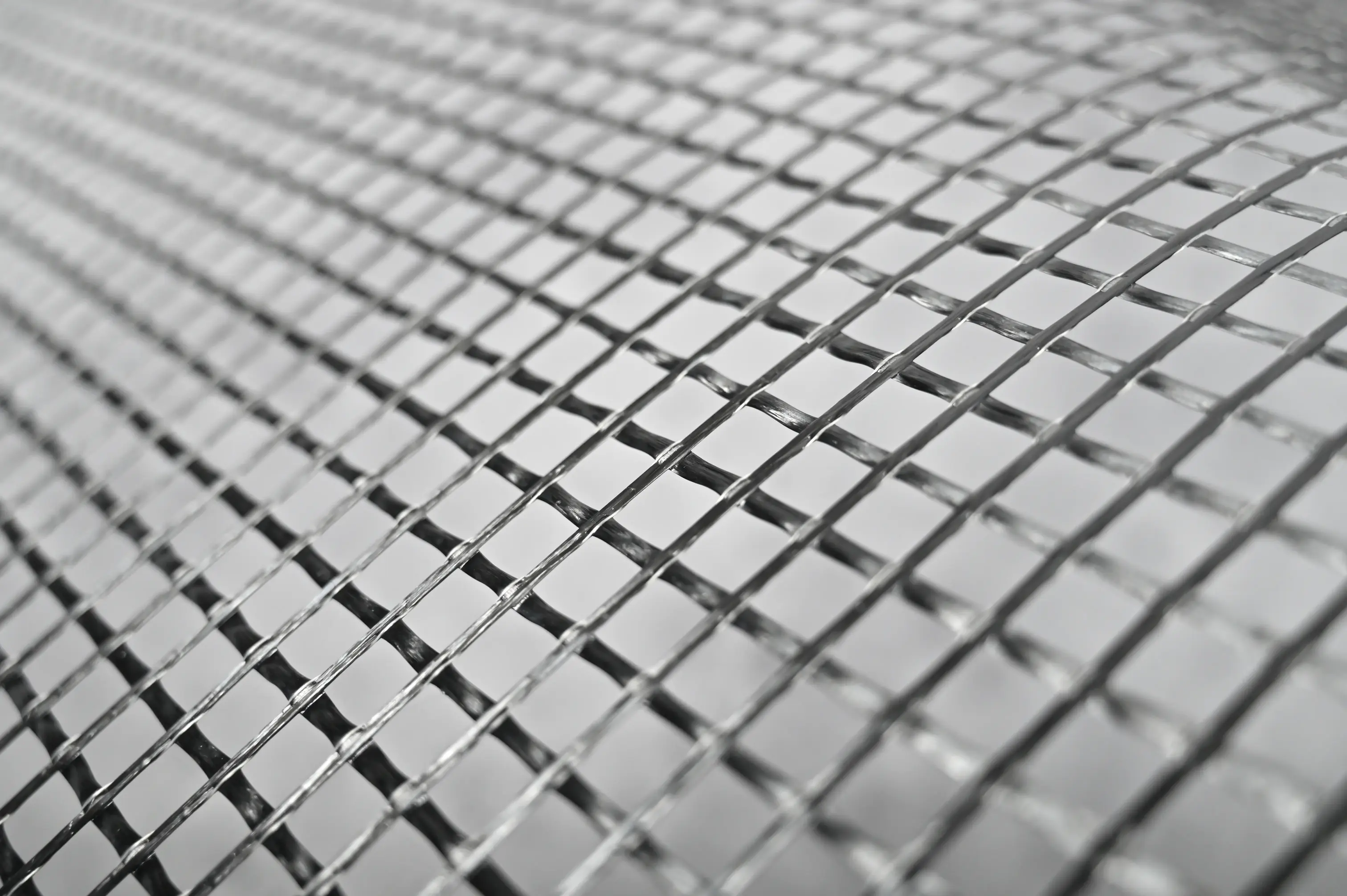
The selected repair concept combined carbon reinforcement with a cathodic corrosion protection (CCP) system. After removal of the deteriorated concrete, a new concrete overlay approximately 40 mm thick was constructed using up to two layers of solidian GRID Q95-C-EP-s38. The selected solution was coordinated with and implemented in conjunction with the cathodic corrosion protection system. The parking structure remained partially operational throughout the construction period.
The project demonstrates that carbon reinforcement and cathodic corrosion protection can fulfil different technical functions within a common repair concept.
How does the choice of reinforcement influence long-term performance?
Concrete repair projects typically focus on removing deteriorated concrete, restoring structural capacity and protecting the remaining structure.
An equally important question, however, is which materials are introduced into the repaired area and to which environmental conditions they will be exposed throughout the remaining service life.
Carbon reinforcement is not susceptible to chloride-induced corrosion. As a result, this particular deterioration mechanism does not affect the newly installed reinforcement.
This does not imply that a structure becomes maintenance-free or that all durability-related issues are eliminated. The long-term performance of any repair depends on numerous factors, including the condition of the existing structure, environmental exposure, structural detailing and the overall repair concept.
However, the newly installed carbon reinforcement itself is not subject to corrosion caused by chlorides.
Why this matters in design and specification
The selection of reinforcement is not simply a material choice. It is an integral part of the overall repair concept and should therefore be considered at an early stage of project planning.
Key aspects include:
- the type and cause of deterioration,
- environmental exposure and chloride contamination,
- structural requirements,
- crack width control requirements,
- available layer thicknesses and structural geometry,
- compatibility with additional protection measures such as cathodic corrosion protection systems, and
- the applicable technical and regulatory framework.
For parking structures, underground garages, bridge structures and other reinforced concrete elements exposed to chlorides, these considerations can have a significant influence on the long-term durability of the selected repair concept.
Considerations for engineering practice
In Germany, technical rules and regulatory approvals are available for defined fields of application of non-metallic reinforcement. The applicable approval route and technical framework always depend on the specific project and its individual requirements.
Particularly in repair and structural strengthening projects, early coordination between the owner, the qualified repair designer, the structural engineer and the involved system partners is advisable. This provides the basis for identifying appropriate technical solutions and the corresponding verification approach for the specific project.
Depending on the technical objectives, the required measures may range from section restoration or crack width control to load-bearing structural strengthening. For such applications, approved strengthening systems such as CARBOrefit® may also form part of the overall project concept, subject to the specific project requirements and the applicable technical approvals.
The solution implemented in the project presented here was likewise based on a project-specific technical assessment and close coordination between all parties involved.
The operational perspective
In addition to structural considerations, operational and economic aspects play an important role. Every repair intervention results in material costs, labour costs and restrictions to the use of the structure.
For parking structure operators, the closure of parking spaces or entire levels directly affects revenue generation. For bridge owners and infrastructure authorities, traffic restrictions and diversions create additional operational and economic impacts.
For this reason, it is often beneficial to evaluate not only the immediate repair of existing damage but also the long-term durability of the selected repair concept during the planning phase.
Recommended technical references
Depending on the specific project requirements, the following documents may be relevant for technical evaluation and project discussions:
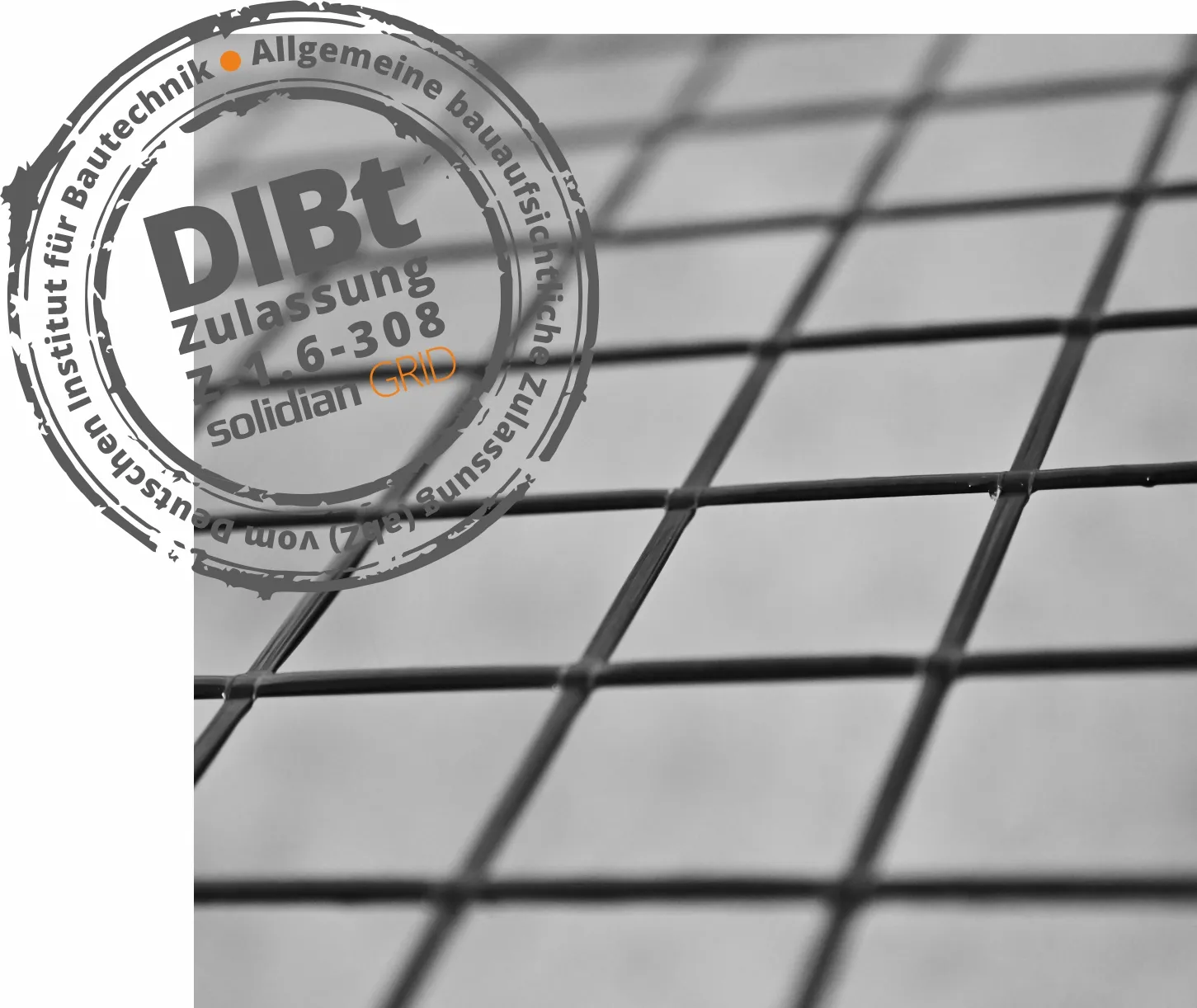
- the national technical approval (abZ)/general construction technique permit (aBG) Z-1.6-308 for solidian GRID within their respective fields of application,
- the DAfStb Guideline for concrete structures with non-metallic reinforcement (2024-01),
- flyer solidian PARKING DECKS,
- flyer solidian RESTORATION, and
- presentation Carbon reinforced concrete - 100 years of durability.
The documents and approvals relevant to a specific project should always be determined on the basis of the particular application and the applicable technical and regulatory requirements.
Ready to discuss your project?
To support planners, we offer an extensive planning center with relevant documents and a structural dimensioning tool. If you are evaluating reinforcement options for a specific repair project, our technical team can help review the relevant parameters and documentation.