lire tout de qui le concerne
The pattern every repair engineer recognises
The cycle tends to look like this: a parking garage slab, a bridge cap, or an infrastructure element shows signs of spalling, cracking, and exposed corroding reinforcement. A repair is carried out - concrete is removed, the surface is cleaned, repair mortar is applied, and the structure returns to service. Some years later, the damage reappears. Not in the same place, necessarily. But from the same cause.
Chloride-induced corrosion of steel reinforcement is one of the most common and most costly failure mechanisms in reinforced concrete construction. Salt from de-icing, marine environments, or industrial processes penetrates the concrete cover and reaches the steel. Corrosion begins. The expansion of corrosion products causes tensile stress in the surrounding concrete, leading to cracking and spalling. Load-bearing capacity is reduced - sometimes visibly, sometimes not.
The problem is well understood. What is less commonly discussed is this: a repair solution that reintroduces steel reinforcement into the same exposure zone does not remove the mechanism that caused the original damage. It resets the clock.
A documented case in Germany
At the Dammstraße parking garage in Ludwigshafen, a slab severely damaged by chloride-induced corrosion required structural strengthening - without closing the parking levels below. A complete replacement of the upper reinforcement layer would have taken several levels out of service. That was not an acceptable option for the operator.
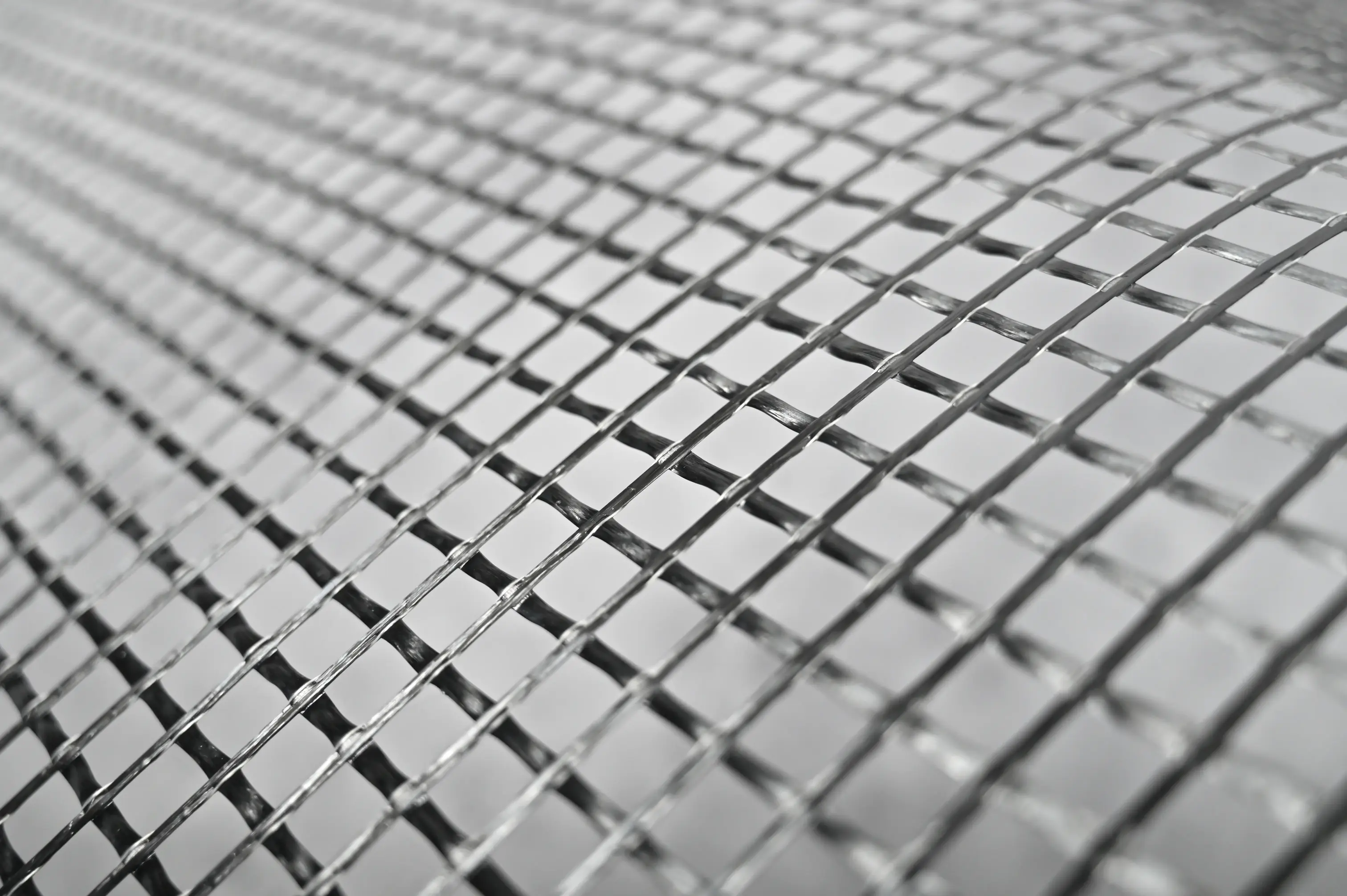
The solution combined approved solidian GRID carbon reinforcement with a cathodic corrosion protection system to permanently secure the remaining steel reinforcement. In this project, solidian GRID was used for the first time in Germany as supplementary reinforcement for structural strengthening of an existing load-bearing structure.
After removing the chloride-contaminated concrete cover, a 4 cm concrete overlay with up to two layers of solidian GRID Q95-C-EP-s38 was applied. The carbon reinforcement was confirmed compatible with the cathodic protection system. The structure remained in partial operation throughout the works.
The key outcome was not only that the repair was completed. It was that the primary corrosion mechanism was removed from the repair zone. Carbon reinforcement does not react to chlorides, de-icing salts, or sulfates.
No corrosion of the carbon reinforcement.
No renewed expansion caused by reinforcement corrosion in the repair layer.
No repeat of the original damage pattern in the repaired area.
Why this matters for the German market
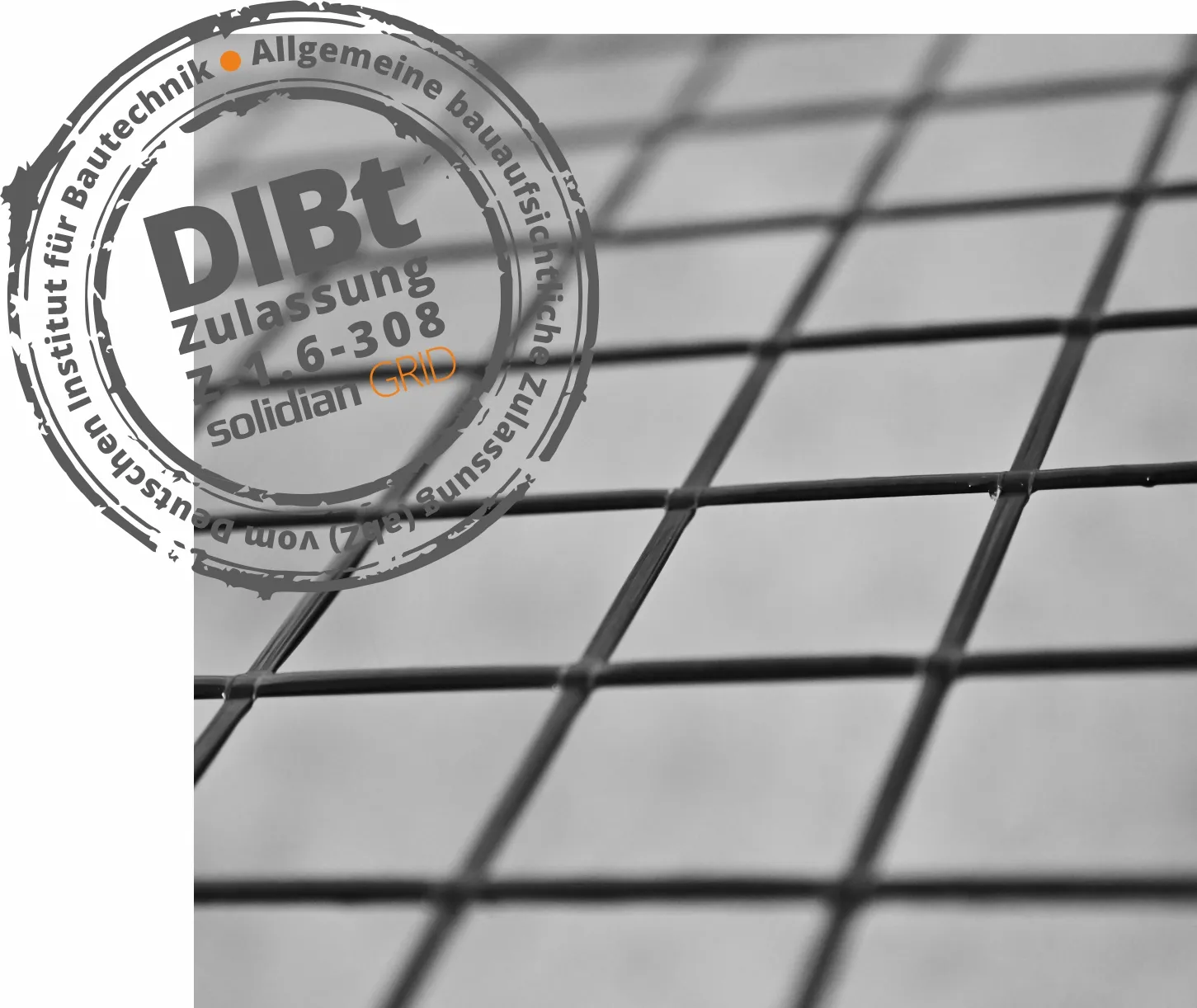
For the German market, the regulatory framework for non-metallic reinforcement in concrete is already in place. solidian GRID carbon reinforcement holds a German national general building approval (abZ) and a general construction technique permit (aBG) from the Deutsches Institut für Bautechnik (DIBt). Structural design and assessment follow the DAfStb guideline for concrete components with non-metallic reinforcement.
This is important because corrosion-free reinforcement is not positioned as an experimental alternative. It can be evaluated within an established technical framework, which gives planners, engineers and clients a clearer basis for specification and project approval.
Where structural strengthening is part of the project scope, approved strengthening routes such as the CARBOrefit® method may also be relevant, depending on the specific application and assessment requirements.. This gives planners different technical pathways depending on whether the project is focused on concrete repair, crack control, structural strengthening or a combination of these requirements.
In applications such as parking decks, bridge infrastructure and chloride-exposed concrete surfaces, this regulatory framework is especially relevant. These are exactly the environments where conventional steel reinforcement is most exposed to corrosion risk, and where repair concepts must be evaluated not only by initial cost, but by durability, maintenance intervals and long-term performance.
The operational argument
Beyond the structural engineering rationale, there is a straightforward operational argument. Every repair cycle carries direct cost: materials, labour, scaffolding, and the loss of operational capacity during works. For a parking garage operator, every closed level represents lost revenue. For a bridge authority, traffic diversion during repair works carries its own costs and public impact.
A repair approach that addresses the root cause of damage - rather than only its visible symptoms - reduces the frequency of future interventions. Not because the structure becomes maintenance-free, but because the mechanism that drove the repair need in the first place no longer applies to the repaired zone.
This is the technical and operational logic behind corrosion-free reinforcement in concrete repair. It is not a claim about a single product outperforming another. It is about what kind of problem you are solving.
What to consider when specifying
For planners and engineers working on concrete repair or structural strengthening projects in Germany, the key question is not only which repair mortar or surface protection system to use. The reinforcement decision also affects the long-term repair concept.
When evaluating non-metallic reinforcement, the most relevant points are the exposure conditions, the available repair layer thickness, the required crack-width control, the structural assessment route, and the compatibility with any cathodic corrosion protection system already specified or planned.
Depending on the project, the technical route may involve the DAfStb guideline, the DIBt approval for solidian GRID, the CARBOrefit® method, or a combination of project-specific assessments. This is why early coordination between the planner, system supplier and reinforcement manufacturer is important.
These points should be clarified early, before the repair concept is fixed and before the reinforcement choice becomes only a material substitution.
Recommended documents
For technical evaluation and project discussions, the following documents are especially relevant. Together, these documents help connect the project argument with approval, design guidance, application context and long-term durability.
- General Building Inspection Approval Z-1.6-308 - solidian GRID
- DAfStb Guideline: Concrete components with non-metallic reinforcement
- solidian PARKING DECKS flyer
- solidian Restoration flyer
- Carbon reinforced concrete - 100 years of durability
Ready to discuss your project?
To support planners and engineers, we offer an extensive planning center with relevant documents and a structural design tool. If you are evaluating reinforcement options for a specific repair or strengthening project, our technical team can help review the relevant parameters and documentation.