leggi tutto
The question that often comes second
When specifying a concrete repair, the first conversations usually centre on the mortar system. What product class, what exposure class, what substrate preparation, what surface protection system. These are the right questions. But there is a question that consistently receives less attention, and its answer may have more influence on the long-term outcome than any mortar decision: what reinforcement is going back in?
In structures that have suffered corrosion damage, the reinforcement is by definition the element that failed to resist the environment it was placed in. Chlorides reached the steel. Corrosion occurred. The concrete was damaged as a result. Repair mortar restores the cross-section. But if new steel goes back into the same environment - at the same depth, subject to the same chloride exposure - the clock starts again.
The concrete cover problem in repair
Conventional steel reinforcement requires concrete cover. The cover protects the steel from carbonation and chloride ingress. In new construction, this cover can be designed from first principles against the expected exposure class. In repair applications, the situation is more constrained.
The chloride front has often already penetrated the existing concrete to a depth that makes maintaining adequate cover for new steel reinforcement within a repair layer that also needs to be practically thin a genuine design challenge.
Increase the cover and the repair layer becomes heavier, adding dead weight to a structure that is already carrying an existing load. Reduce the cover to keep the layer thin and the steel's long-term protection is compromised.
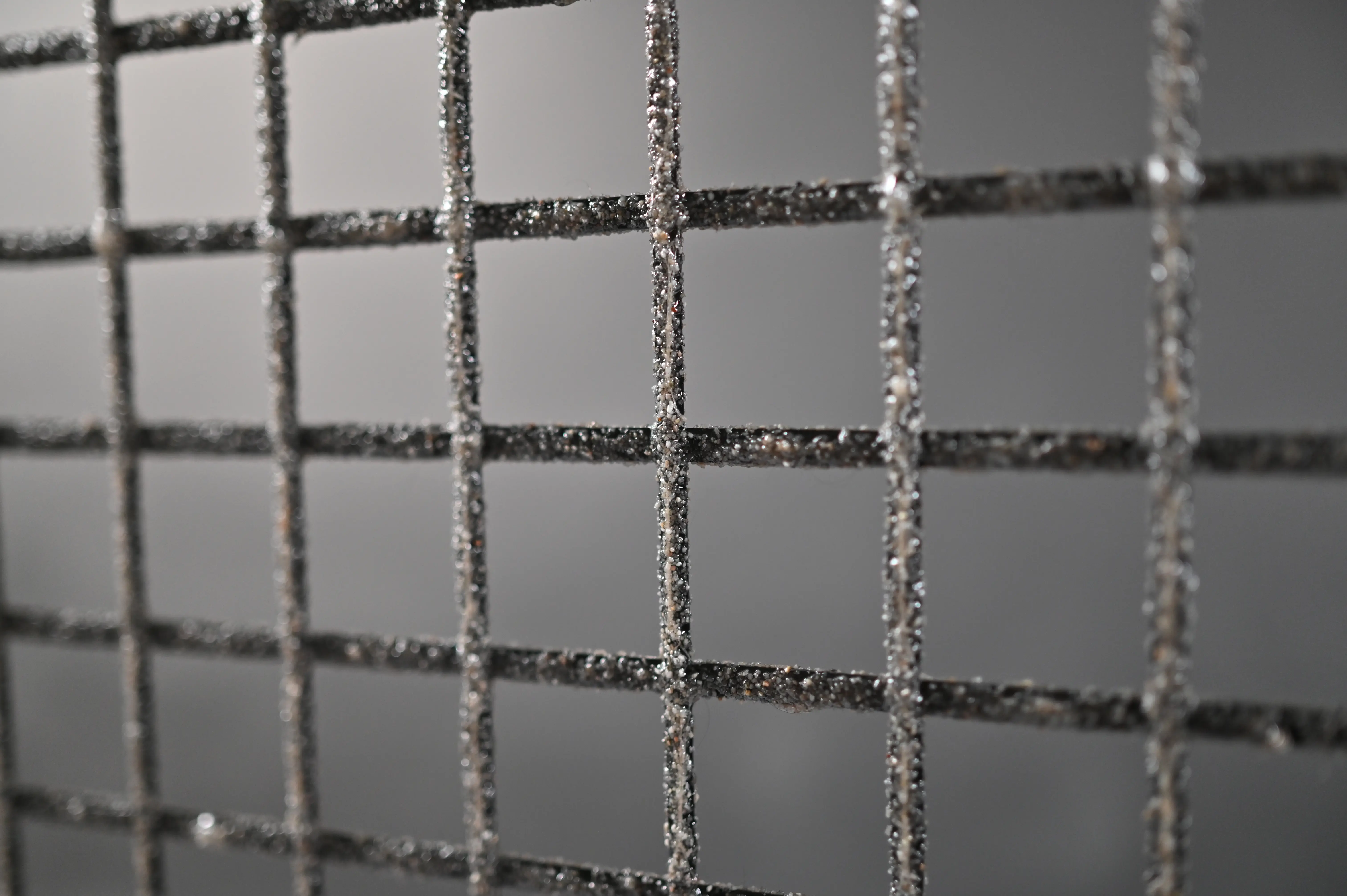
Non-metallic reinforcement changes this constraint fundamentally. Carbon and glass fibre grids do not corrode. They are not affected by chlorides, de-icing salts, acids, or sulfates. The concrete cover they require is the minimum needed for force transmission and bond, not for protection. This unlocks thinner repair layers, less additional dead weight, and no reintroduction of a corrosion-sensitive element into the repaired zone.
What changes when the reinforcement is non-metallic
The difference is not only material-based. It changes the design logic of the repair layer.
With steel reinforcement, concrete cover is part of the corrosion protection strategy. In chloride-exposed repair zones, this can create a conflict between the cover required for durability and the repair layer thickness that is practical on the existing structure.
With carbon or glass fibre grid reinforcement, the concrete cover is no longer needed to protect the reinforcement from corrosion. The cover is defined by bond, force transmission and the specific design requirements of the repair concept. This allows planners to evaluate thinner repair layers, lower additional dead weight and reinforcement positioning closer to the surface where crack-width control is required.
In practical terms, reinforcement choice affects:
- required repair layer thickness
- additional dead weight
- crack-width control
- compatibility with surface protection systems
- long-term durability in chloride-exposed areas
- the technical documentation needed for approval and specification
What the approval framework enables
For engineers working in Germany, the ability to use non-metallic reinforcement in repair is no longer a question of experimental application. solidian GRID holds a German national general building approval (abZ) and general construction technique permit (aBG) from the DIBt. Structural design follows the DAfStb guideline for concrete components with non-metallic reinforcement - the same regulatory framework that governs new construction with these materials.
This means that the use of carbon grid reinforcement in a repair layer can be designed, specified, statically verified and inspected through an established and auditable process. The Ludwigshafen project - structural strengthening of a parking garage slab in combination with cathodic corrosion protection - was the first documented application of this kind in Germany. It is now a documented reference case.
The crack width dimension
Reinforcement choice in repair is not only about corrosion protection. It also affects crack behaviour in the repair layer, which in turn affects the performance of any surface protection system applied over the repair.
solidian ANTICRACK is a variant of solidian GRID specifically developed for crack-width limitation. Its sanded surface achieves strong mechanical interlock with the repair mortar, and because it can be placed very close to the surface without any corrosion concern, it acts directly on crack formation in the repair layer.
The result is smaller crack widths, more evenly distributed, which reduces the demands placed on the surface protection system above.
With sufficiently tight crack widths in the repair layer, a rigid OS8 surface protection system is adequate. Without that crack control, flexible crack-bridging systems such as OS10 to OS14 may be required instead. Rigid systems are mechanically more resistant and do not require the periodic replacement that a flexible membrane needs. This is a direct, calculable difference in long-term maintenance costs.
The final system selection must always be verified project by project. Crack-width limitation, repair mortar, reinforcement layout and surface protection system have to be considered together. This is why early coordination between the planner, system supplier and reinforcement manufacturer is important, especially in projects where surface protection performance and future maintenance intervals are part of the decision.
Practical relevance for current projects
If you are currently planning a concrete repair project and evaluating reinforcement options, the relevant parameters to assess are the applicable exposure class, the available repair layer thickness, the structural requirements and the planned surface protection system.
The structural requirement may range from reprofiling and cross-section supplementation to load-bearing strengthening. Each case creates different requirements for reinforcement selection, layout, documentation and verification.
These decisions should be clarified early. Reinforcement choice is not only a material substitution. It affects the repair concept, the surface protection system, the expected maintenance interval and the technical route for specification.
Recommended documents for specification
For technical evaluation and specification, the following documents are especially relevant:
- General Building Inspection Approval Z-1.6-308 - solidian GRID
- DAfStb Guideline: Concrete components with non-metallic reinforcement
- solidian GRID carbon technical product data sheet
- solidian ANTICRACK technical product data sheet
- solidian Restoration flyer
- solidian PARKING DECKS flyer
Ready to discuss your project?
To support planners and engineers, we offer an extensive planning center with relevant documents and a structural design tool. If you are evaluating reinforcement options for a specific repair or strengthening project, our technical team can help review the relevant parameters and documentation.