Durabilité inégalée et rentabilité optimale
Transformez les infrastructures en béton exposées à l'eau. Réduisez les coûts. Construisez pour les générations futures.
En savoir plus

Nos grilles en carbone sont hautement résistantes aux attaques acides.
Même dans des expositions sévères telles que les attaques au soufre biogénique dans les tunnels ou stations d’épuration, aucune corrosion n’apparaît.
Même les conditions de test extrêmes de la norme DIN 19573 (exposition à pH0 et pH1) sont satisfaites sans aucun problème par nos armatures carbone.
Cela permet une classification dans la classe d’exposition maximale XWW4.
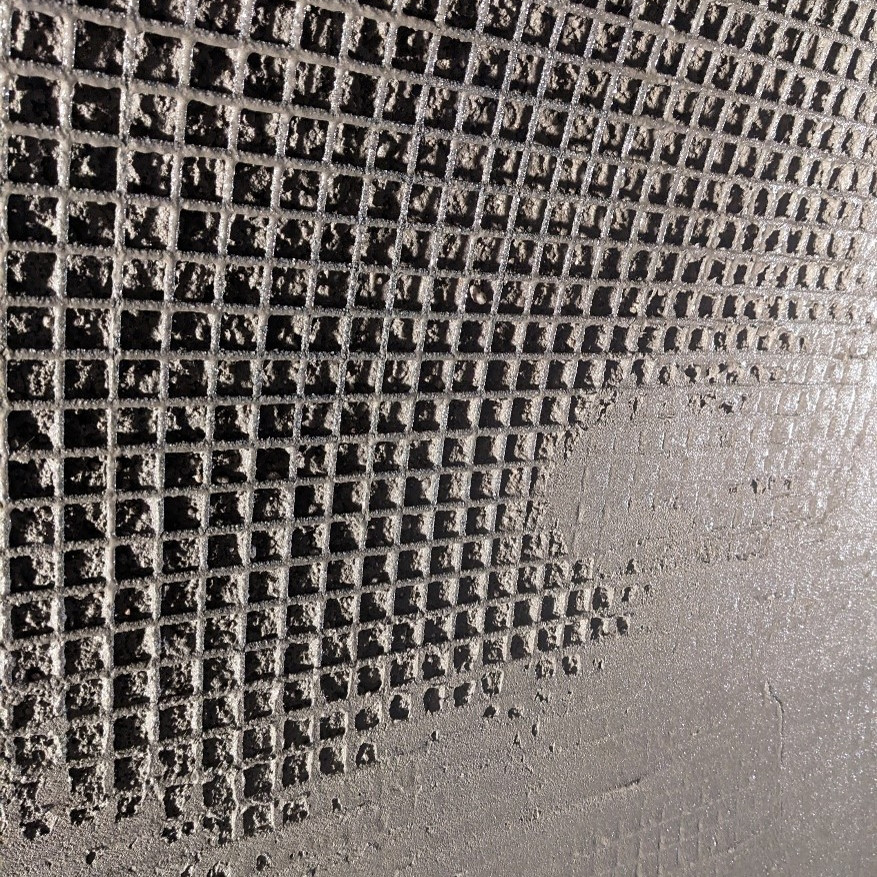
Comparaison directe :
Questions fréquentes :
Nos armatures non corrosives sont utilisées dans des projets de référence.
Projet du collecteur principal de Leipzig :
Longévité prolongée avec 80 m restaurés, 160 m prévus.
Canal de circulation d’Anderten :
300 m² restaurés efficacement avec solidian GRID.
Que vous soyez investisseur, planificateur ou ingénieur, découvrez les avantages de solutions durables et performantes pour vos défis d’infrastructure.
Construisons ensemble des projets durables, efficaces et prêts pour l’avenir.
Yes, in cases where steel reinforcement has corroded, solidian GRID can serve as a substitute for structural reinforcement. The existing corroded steel can remain in place and be covered with a new layer of carbon-reinforced mortar, restoring structural integrity.
When combined with high-quality mortars, solidian GRID significantly enhances the overall durability of the system, providing a robust solution for demanding environments.
Yes, solidian GRID strikes a balance between stiffness and flexibility, allowing it to be applied to curved surfaces with diameters greater than 800mm.
The lightweight nature of solidian GRID facilitates easy transportation, even through sewage tunnels, and simplifies the installation process, reducing labor and equipment requirements.
Yes, a certified Environmental Product Declaration (EPD) is available for both solidian GRID and solidian REBAR. The EPD provides transparent and verified information about the environmental impact of these products throughout their life cycle, supporting sustainability assessments in construction projects.
Yes, solidian GRID has obtained the General Building Approval (abZ) from the German Institute for Building Technology (DIBt). This approval authorizes its use as carbon reinforcement grids in construction, ensuring compliance with national building standards.
solidian GRID is versatile and works with a range of binders, including Portland Cement, Calcium Aluminate Cements, and Geopolymer Cements.
solidian GRID holds German Approval as reinforcement for EN 206 concretes, supporting its compatibility with various mortar systems, including those adhering to DIN 19573.
Concrete layers reinforced with solidian GRID can be as thin as 20mm, as no additional concrete cover is needed to protect the reinforcement from corrosion.
Yes, solidian GRID can be applied as an additional layer over existing steel-reinforced concrete. When combined with solidian ANTICRACK, it offers enhanced crack-limiting properties, providing extra protection to the underlying steel reinforcement.
Classified under XWW4, solidian GRID ensures long-term performance for over 50 years, making it a durable choice for long-term infrastructure projects.
solidian GRID is fully resistant to severe acidic conditions, including environments with pH levels as low as 0. It has successfully passed tests in accordance with DIN 19573 standards for pH 0 and pH 1.
solidian GRID enables the design of thinner concrete layers (greater than 20mm) without requiring additional concrete cover for reinforcement protection. This reduction in material usage leads to lower resource consumption and a diminished environmental footprint, supporting more sustainable construction practices.
Additional information: