Stronger floors & slabs with non-corrosive reinforcement
- Structural Reinforcement: Ideal for high-load areas like industrial floors, balcony slabs, and pavement surfaces.
- Screed Reinforcement: Perfect for crack control and dimensional stability in underlayments and surface screeds.
- Certified Durability: Our screed reinforcement range now includes CE-certified glass, and carbon meshes.
- Resistance to Chemicals: Designed for use in chemically aggressive environments without degradation.
- Time-Proven Systems: Lightweight, corrosion-free, and easier to handle than steel – with strong references to back it up.
A comprehensive portfolio
for modern floor systems
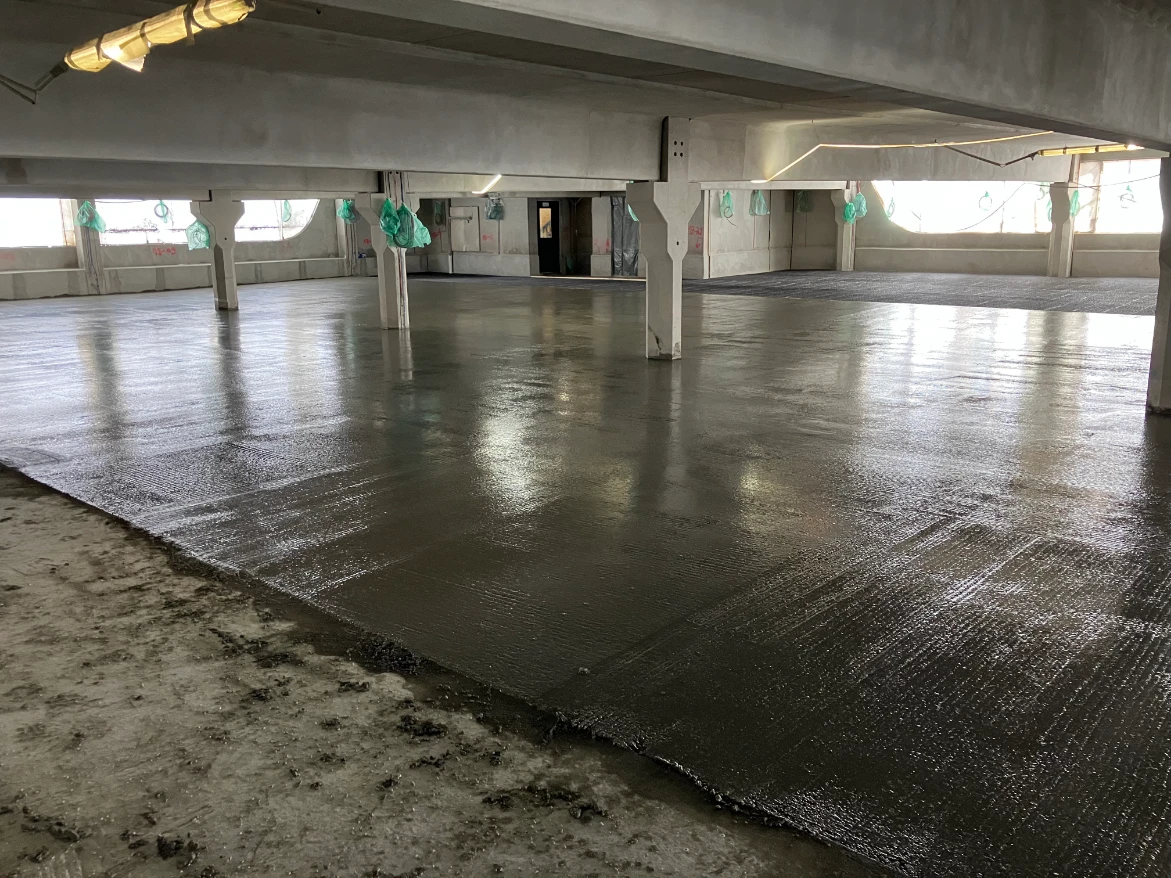
Whether you're reinforcing concrete slabs or improving screed performance, our solutions deliver structural strength, crack control, and long-term durability — even in chemically aggressive or high-load environments.
- solidian ANTICRACK: Exceptional bonding behavior ensures minimal crack widths and liquid-tight performance – ideal for both structural floors and CE-certified screed application.
- solidian GRID Carbon: ultra-strong, lightweight and corrosion-resistant carbon grid reinforcement for load-bearing concrete components.
- solidian Primafloor: Range CE-certified glass, basalt, and carbon meshes designed for screed reinforcement – covering a wide spectrum of industry needs and standards.
- solidian Briksy Carbon: CE-certified carbon mesh for screed applications.
Together, these reinforcements form a reliable portfolio tailored to today’s construction standards – balancing mechanical performance, certification, and installation efficiency.
Trusted by leading contractors
Our glass, basalt, and carbon reinforcements are used every day in construction environments across Europe – helping engineers and contractors build better, longer-lasting floors and slabs.
From underground parking structures to high-performance industrial flooring, our materials enable faster installation, reduced weight, and better results in chemically exposed or load-bearing zones.
Trusted by builders across Europe
Our systems are used in high-end structural slab projects, balconies, and certified screed floors.
Parking Garage Stuttgart:
Lightweight, non-corrosive reinforcement for long-term durability.
Multiple EU references:
Certified floor systems using CE-compliant mesh reinforcements.
Explore how our floor reinforcements can
elevate your construction projects
From structural strength to certified screed systems, we help you build better. Learn how our non-corrosive reinforcements simplify your process and secure lasting performance.

- Product Performance & Applications
- Certification & Compliance
- Installation & Handling
- Are your meshes suitable for high-load areas?
- Can your reinforcements be used in chemically aggressive environments like parking garages or industrial floors?
- Why is CE certification important?
- Which products are CE-certified for screed reinforcement?
- Is special equipment needed to install these reinforcements?
- Can your meshes be cut on site?
-
solidian Primafloor 130, 145, 340
-
solidian Primafloor C220 and B215
-
solidian ANTICRACK Q43/Q47/Q85/Q95
-
solidian Briksy Carbon
frequently asked questions
Absolutely. Both structural solutions (e.g. solidian ANTICRACK) and screed meshes (e.g. solidian Primafloor) are tested for mechanical performance and crack control under dynamic and static loads.
Yes. Products like solidian ANTICRACK and REMAT are engineered for high-performance use, including resistance to chemicals, de-icing salts, and water ingress. They are ideal for parking decks, warehouses, and production halls.
CE marking ensures compliance with European safety, health, and environmental protection standards. It also simplifies specification in public or regulated construction projects.
The CE-certified group includes:
This covers most standard applications on the market.