read all about it
The question that often comes second
When planning a concrete repair project, the initial discussions usually focus on the repair mortar system. Which product class is appropriate? What exposure conditions need to be considered? What level of substrate preparation is required? Which surface protection system should be specified?
These are all important questions. However, there is another issue that often receives less attention, despite having a significant influence on the long-term performance of the repair concept: Which reinforcement will be used in the repaired area?
In structures affected by reinforcement corrosion, it is essential to consider the conditions under which the newly installed reinforcement will perform throughout the remaining service life of the structure. While the repair mortar restores the concrete section, the choice of reinforcement influences how the repaired zone responds to its environmental exposure over time.
The role of concrete cover in concrete repair
Concrete cover fulfils several important functions in reinforced concrete structures. Among other things, it contributes to the corrosion protection of reinforcing steel while also influencing bond behaviour, durability and structural performance.
In new construction, concrete cover can be designed according to the expected exposure conditions. In concrete repair, however, the boundary conditions are often more complex.
Particularly in chloride-contaminated structures, chlorides may already have penetrated deep into the existing concrete. At the same time, repair layers are often required to remain as thin as practicable in order to minimise additional dead load and avoid unnecessary loading of the existing structure.
This can create conflicting design requirements.
Non-metallic reinforcement changes these boundary conditions. Carbon and glass fibre reinforcement are not susceptible to the corrosion mechanisms that affect steel reinforcement in the presence of chlorides or de-icing salts. As a result, the required concrete cover is not governed by corrosion protection of the reinforcement itself, but by bond performance, load transfer and the specific structural and project requirements.
Under suitable project conditions, this can provide additional design flexibility, for example with regard to repair layer thickness or reinforcement placement.
What changes when non-metallic reinforcement is used?
The difference is not limited to the material itself. It also affects the underlying design approach.
For conventional reinforcing steel, concrete cover is an integral part of the corrosion protection strategy. In chloride-exposed repair applications, this can create a conflict between durability requirements and practically achievable repair layer thicknesses.
For non-metallic reinforcement, this particular limitation does not apply to the reinforcement itself. Instead, the required concrete cover is determined by bond behaviour, force transfer and the specific requirements of the repair concept.
Depending on the project-specific conditions, this may influence, among other things:
- the required repair layer thickness,
- additional dead load,
- reinforcement arrangement,
- crack width control,
- compatibility with surface protection systems, and
- long-term durability in chloride-exposed environments.
The technical opportunities resulting from these characteristics should always be evaluated on a project-specific basis.
Project-specific assessment rather than standard solutions
Technical rules and regulatory approvals for defined fields of application of non-metallic reinforcement are available in Germany. The applicable approval route and technical framework, however, always depend on the specific project and its individual requirements.
The project carried out in Ludwigshafen, involving the structural strengthening of a parking deck slab in combination with a cathodic corrosion protection system, was likewise implemented on the basis of a project-specific technical assessment and close coordination between all parties involved.
Particularly in repair and structural strengthening projects, early coordination between the owner, the qualified repair designer, the structural engineer and the involved system partners is therefore advisable.
The importance of crack width control
The choice of reinforcement influences not only durability but also the crack behaviour of the repair layer and its interaction with the selected surface protection system.
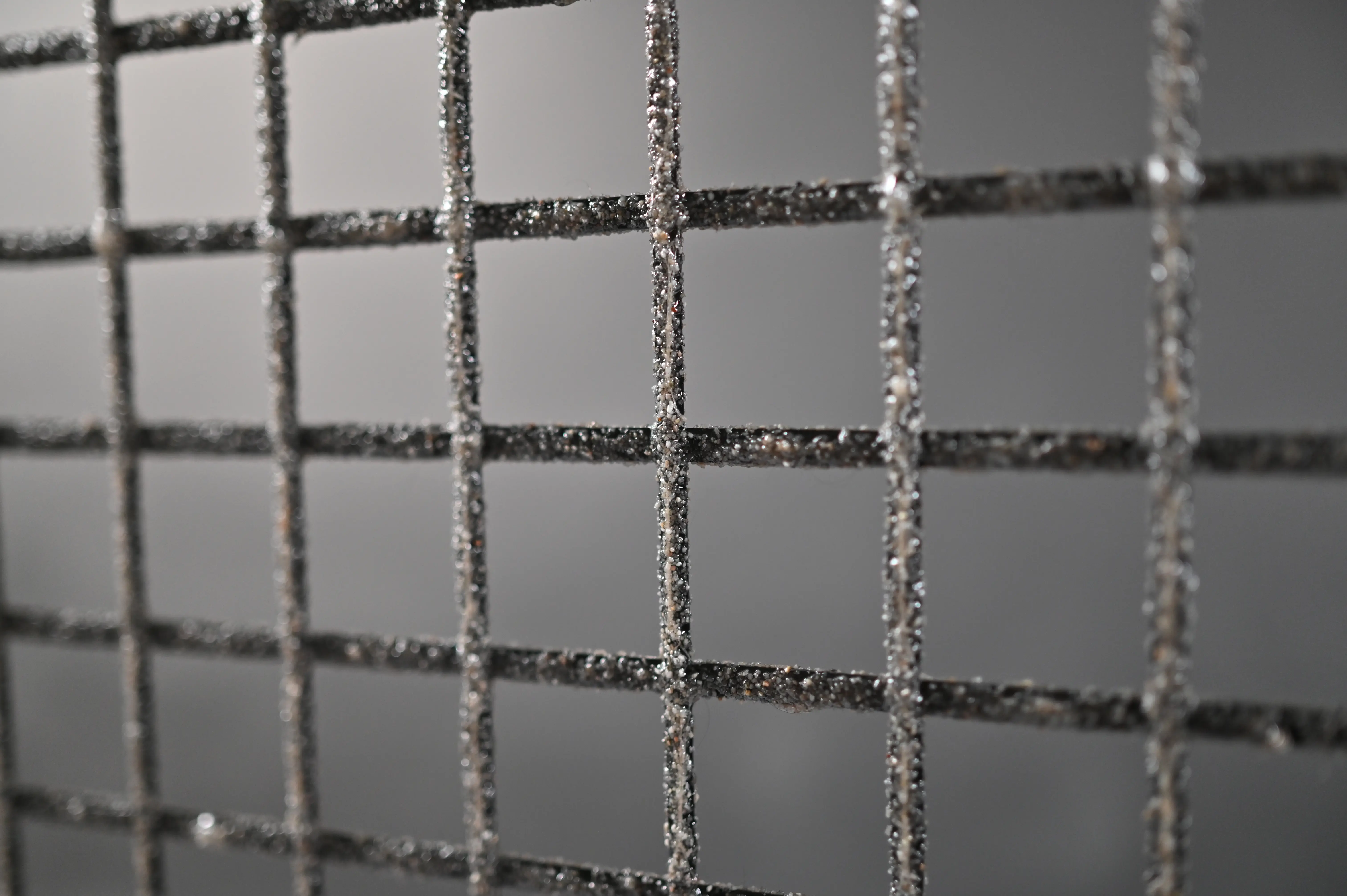
solidian ANTICRACK has been specifically developed for applications where crack width control and crack distribution are key design considerations. Its sand-coated surface provides excellent mechanical bond with suitable repair mortars.
The interaction between reinforcement, bond characteristics and repair mortar can contribute to a more favourable crack distribution and effective crack width control within the repair layer.
In turn, controlled crack behaviour may influence the requirements placed on the overall system consisting of repair mortar and surface protection. The selection of the appropriate surface protection system should always be based on the specific project conditions and the applicable technical standards.
For this reason, crack width control, repair mortar, reinforcement layout and surface protection should not be considered independently. Their combined interaction ultimately determines the performance of the overall repair system.
Practical relevance for current projects
When planning a concrete repair project, structural requirements should be considered together with environmental exposure, available repair layer thickness, reinforcement arrangement and the intended surface protection system from an early stage.
Project requirements may range from local reprofiling or section restoration to fully load-bearing structural strengthening. Accordingly, the requirements for reinforcement selection, structural verification and execution details will differ from project to project.
Depending on the technical objectives and project-specific conditions, different technical approaches may be appropriate. While concrete repair projects often focus on durability, crack width control and corrosion resistance, load-bearing strengthening applications may, where appropriate and subject to the applicable technical approvals, also make use of approved strengthening systems such as CARBOrefit®.
The selection of reinforcement is therefore far more than a simple material choice. It influences the overall repair concept, structural detailing and the long-term performance of the selected solution.
Recommended technical references
The following documents may be relevant for project-specific evaluation and specification:
- the national technical approval (abZ)/general construction technique permit (aBG) Z-1.6-308 for solidian GRID within their respective fields of application,
- the DAfStb Guideline for concrete structures with non-metallic reinforcement (2024-01),
- solidian GRID carbon technical product data sheets,
- solidian ANTICRACK technical product data sheets,
- flyer solidian PARKING DECKS,
- flyer solidian RESTORATION.
The documents and approvals relevant to a specific project should always be determined on the basis of the individual application and the applicable technical and regulatory framework.
Ready to discuss your project?
To support planners, we offer an extensive planning center with relevant documents and a structural dimensioning tool. If you are evaluating reinforcement options for a specific repair project, our technical team can help review the relevant parameters and documentation.