read all about it
Five practical answers about non-corrosive bed joint reinforcement for durable masonry walls. Lighter than steel, rust-free and delivered on a roll: solidian Briksy changes how bed joint reinforcement is handled on site, not how walls are built. Here are the answers to the five questions we hear most often.
1. How is solidian Briksy different from steel bed joint reinforcement?
It doesn’t rust, it’s light, and it comes on a roll.
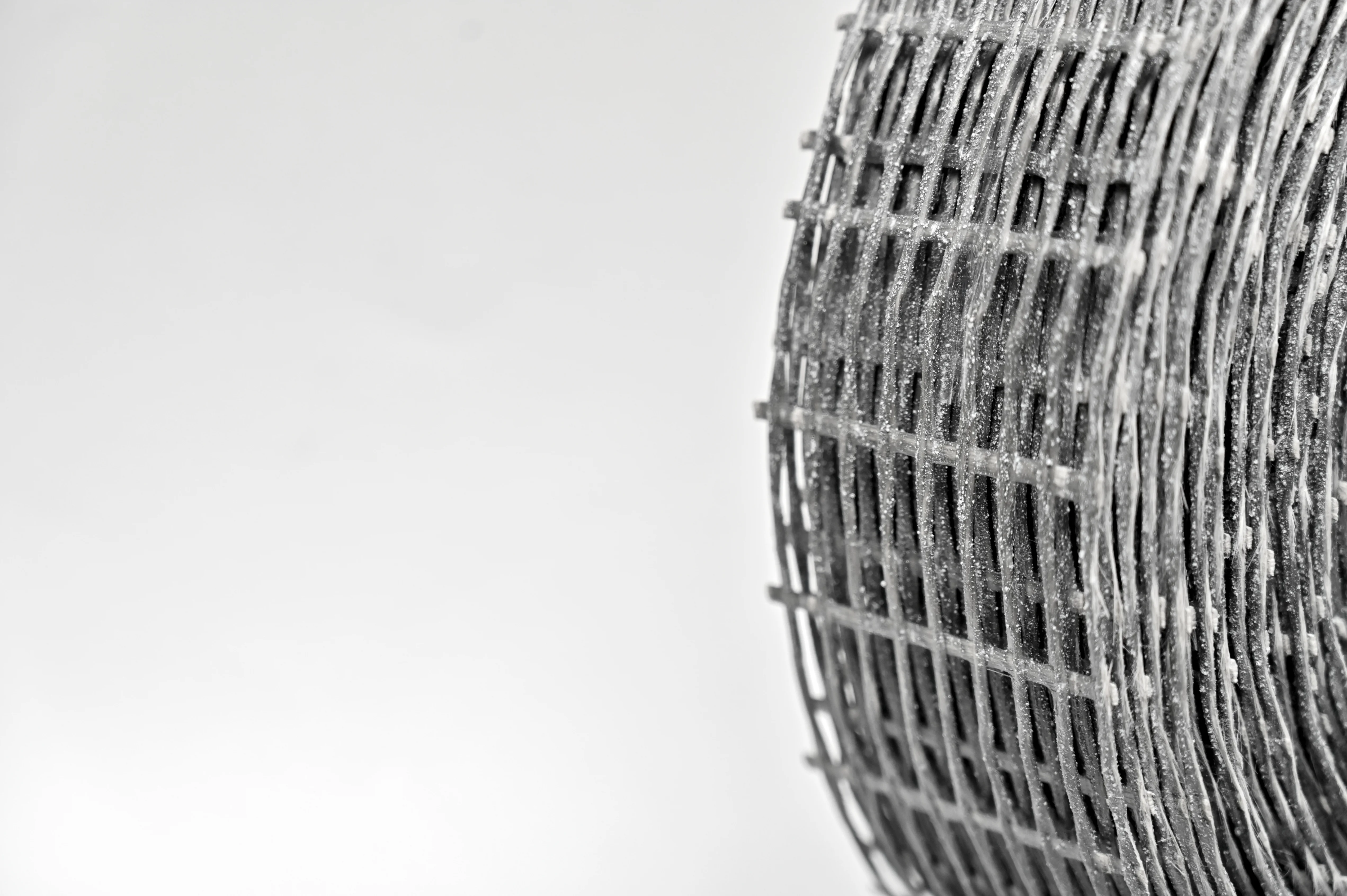
solidian Briksy is a non-metallic mesh made of alkali-resistant (AR) glass. There is no steel inside that could corrode, even in masonry exposed to moisture. Supplied in 50 m rolls, it is easy to carry, store and handle. On site you simply cut it to length without specialist tools, and long rolls mean fewer overlaps.
2. Can it be used in both interior and exterior walls?
Yes, one product for both.
solidian Briksy is assessed for use in internal and external masonry walls. Because it cannot rust, moisture-exposed walls are no reason to switch to a different product. One reinforcement for the whole building makes ordering and site logistics simpler.
3. Which masonry units and mortars does it work with?
The ones you already use.
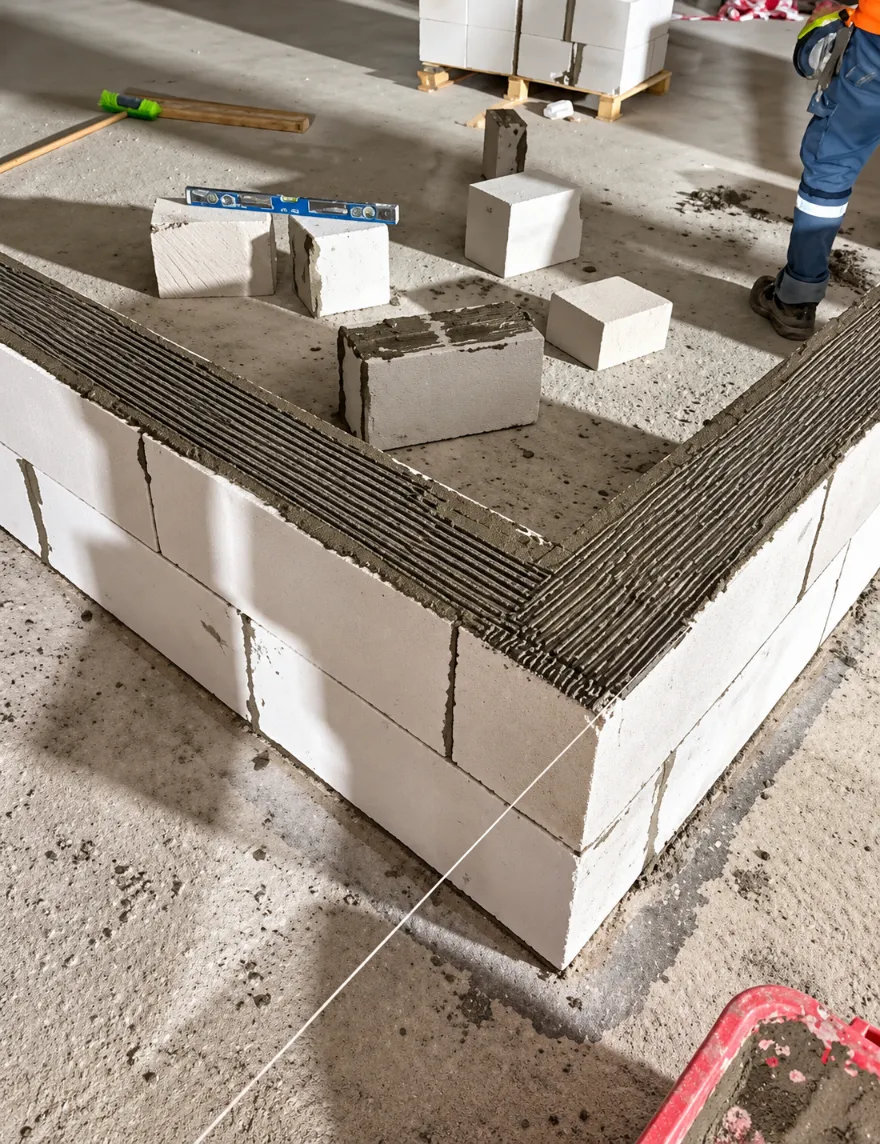
solidian Briksy is intended for walls built from common masonry units: clay bricks and blocks, calcium silicate, concrete and aerated concrete (AAC). It has been tested in walls of solid bricks, perforated clay blocks and AAC blocks. It is laid in normal-purpose or thin-layer mortar (strength class M5 or higher). The mesh is thin and lies flat in the joint. Several widths are available. The right width and layout depend on the wall and on the conditions in the technical documentation.
4. How does it help prevent cracks?
By taking up tension where the wall needs it.
Embedded in the horizontal mortar joints, solidian Briksy distributes tensile stresses in the wall. This limits the formation and spread of cracks caused by shrinkage and thermal movement. It is most useful around window and door openings, in long walls and wherever stresses concentrate. There is one more advantage over steel. Because it cannot corrode, solidian Briksy can be placed close to the face of the wall, within 25 mm of it. That is where it works best against out-of-plane loads such as wind pressure.
5. What testing and approvals stand behind it?
Independent tests and a national technical assessment.
solidian Briksy (AR glass type) holds Czech National Technical Assessment No. 060-062433 for structural use as bed joint reinforcement, together with the corresponding Product Certificate and Declaration of Conformity. The assessment is based on independent tests at TZÚS Prague: tensile strength (also after alkaline conditioning), bond in the mortar joint (EN 846-2), in-plane bending and shear (EN 846-9) and out-of-plane bending of masonry walls (EN 1052-2). In addition, wall tests at Sakarya and Düzce Universities in Türkiye, under diagonal and cyclic loading, showed better crack control and energy dissipation in the reinforced walls. The NTA is a Czech national document. Requirements for your country and project should always be checked.
A practical choice for everyday masonry
Non-corrosive, easy to handle and tested in real walls, solidian Briksy fits the way you already build.
Interested in using solidian Briksy on your next project?
Contact one of our distribution partners for product availability, technical documentation and application guidance:
-
Benelux: Multifil
-
Poland: PBN Invest
-
Scandinavia: Pretec
-
United Kingdom & Ireland: Precon Products
-
Spain & Portugal: DOSADOS