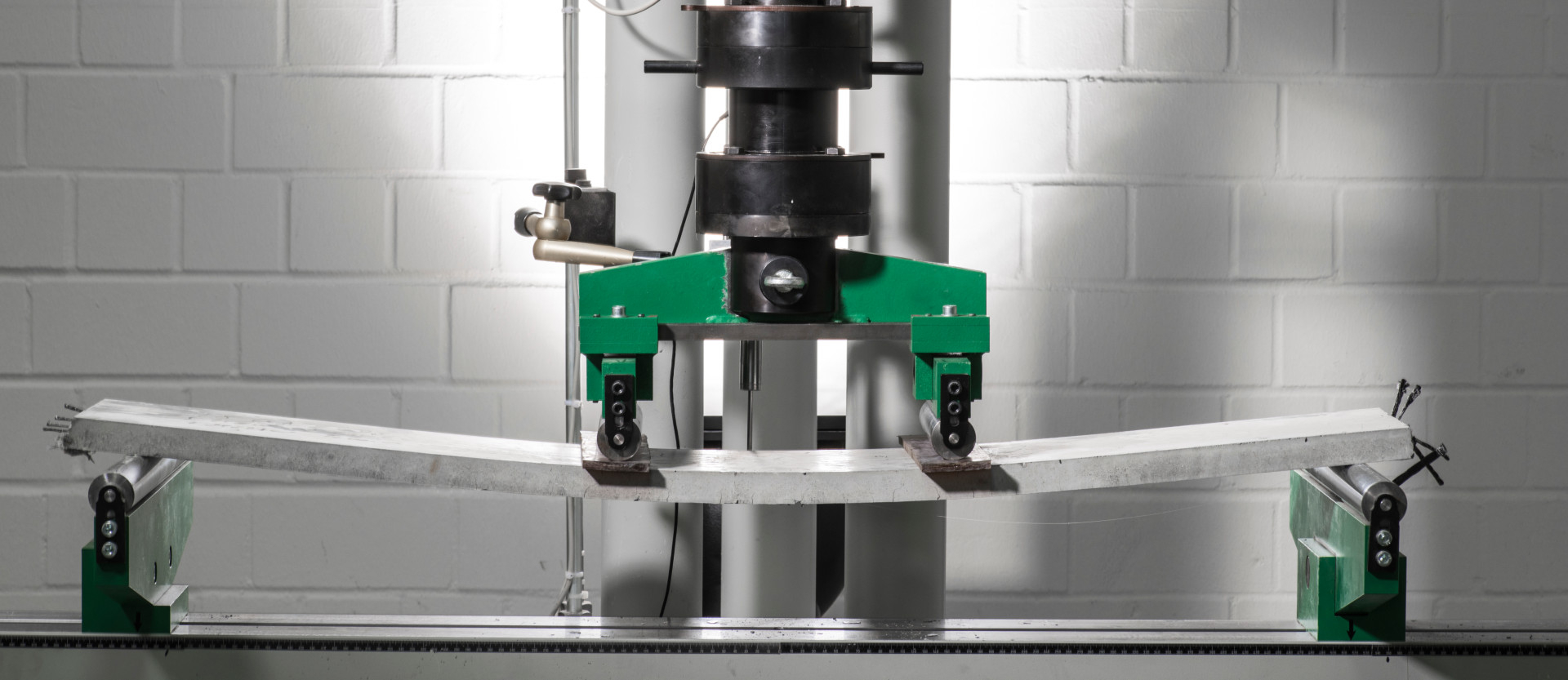
Planning Center
Basics and tools for the design, calculation and dimensioning of components with non-metallic reinforcement

DAfStb Guideline "Concrete components with non-metallic reinforcement"
Tender texts for our non-metallic reinforcements on www.ausschreiben.de
Planning package "Concrete components with non-metallic reinforcement" (2025-06)
In our planning packages you will find the following information:
Planning package "Concrete components with non-metallic reinforcement"
Please note: The DAfStb documents and the calculation tool are not included in the planning packages. Downloading the calculation tool requires registration.
In Germany, the first version of the DAfStb Guideline “Concrete components with non-metallic reinforcement” has existed since January 2024 and forms the basis for the design, calculation and dimensioning of buildings and civil engineering structures made of concrete that are reinforced with non-metallic reinforcement elements. This provides a recognized technical rule for the new construction method, which, in combination with corresponding technical approvals for the product and the design for glass and carbon reinforcement grids and bars in a wide range of applications, makes the project-related approvals (ZiE, vBG) that are still required today superfluous.
Part 1, which regulates the statical and structural design of concrete components with non-metallic reinforcement based on Eurocode 2, is in the foreground and represents the most important basis for you as a planner. Part 2 of the guideline regulates the requirements for reinforcement products in conjunction with Part 4, which describes the test procedures for determining the material properties. The required properties, which we as reinforcement manufacturers must determine and confirm through a national technical approval, are provided to you in the form of technical product data sheets. Part 3 describes the special features that arise in construction with the new materials. Finally, Part 5 provides information on the necessary proofs for the usability of non-metallic reinforcement and the applicability of the design, which guides you as a planner through the currently required application process.
You can purchase the DAfStb guideline from Beuth Verlag. Click HERE to go directly to the DINMedia online shop (only in German available).
Booklet 660 of the DAfStb provides explanations and examples that go beyond the guideline and are intended to make it easier for users to understand and use the guideline.
The booklet consists of two parts:
You can purchase issue 660 of the DAfStb from Beuth Verlag. Click HERE to go directly to the DINMedia online shop (only in German available).
This is a great relief for you – for sure!
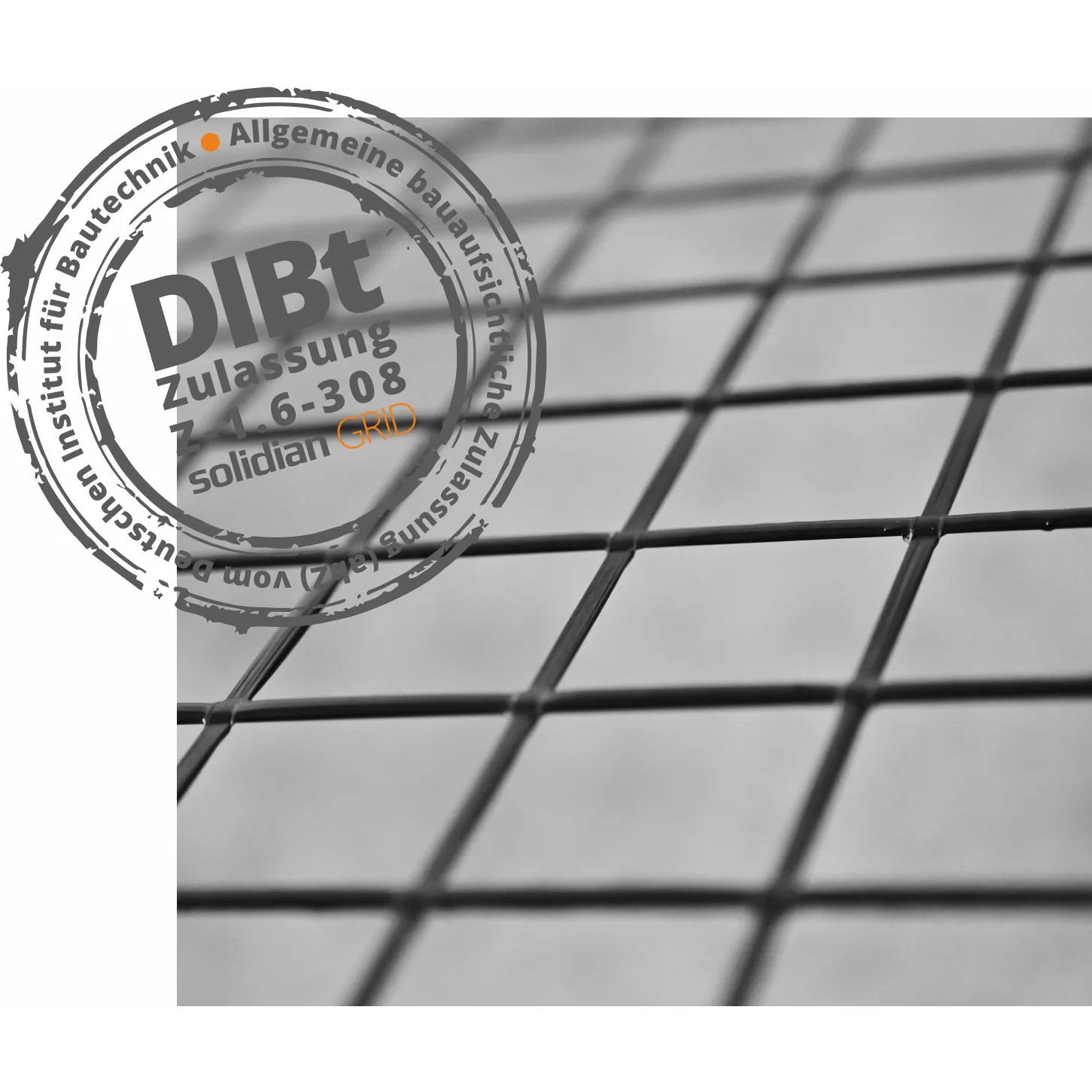
Because with our first German national technical approval (abZ) in combination with a general construction technique permit (aBG), a document has been available since March 2024 that proves the applicability of our solidian GRID carbon reinforcement grids in accordance with the state building regulations and thus makes the project-related approvals (ZiE, vBG) that were previously required superfluous.
In addition to listing the application areas and boundary conditions, the document provides you with all the necessary material properties to carry out a design in conjunction with the DAfStb guideline “Concrete components with non-metallic reinforcement”.
Areas of application
Boundary conditions
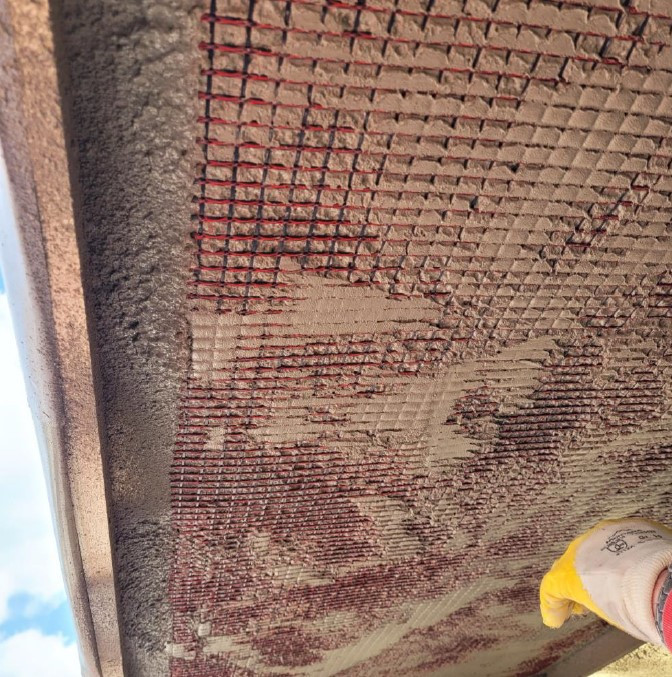
CARBOrefit® is the process for structural strengthening of reinforced concrete components with the high-performance material carbon concrete. With the German national technical approval / general construction technique permit Z-31.10-182 from the DIBt, you have a solution at your disposal that makes a special contribution to resource-saving construction.
Areas of application
Boundary conditions
The design procedure for CARBOrefit® reinforcement differs from the procedure according to the DAfStb Guideline “Concrete components with non-metallic reinforcement” and is regulated in Appendix 5 “Design and construction” of this abZ/aBG.
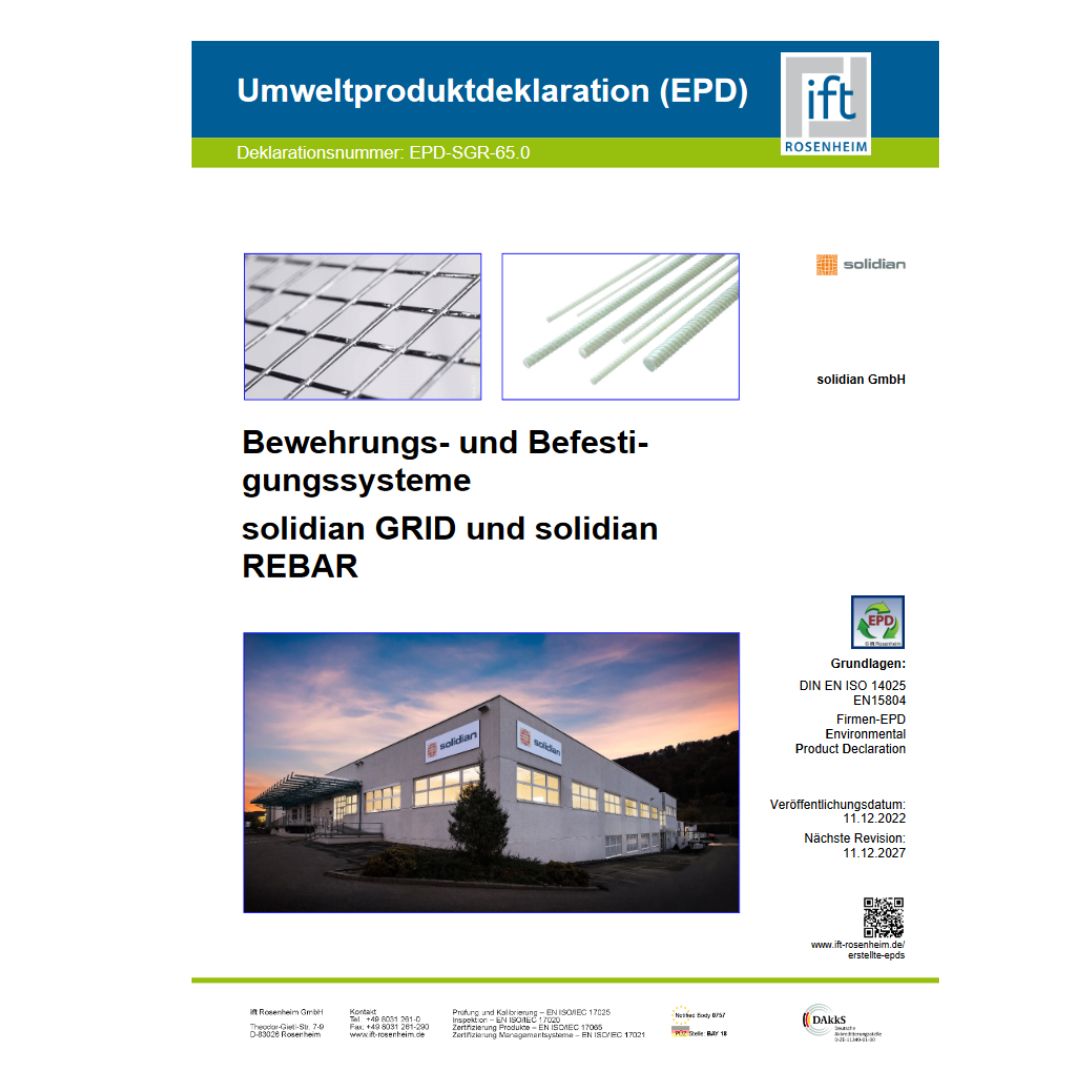
With the environmental product declaration (EPD) EPD SGR GB 65.0, we provide you with environmentally relevant data about the life cycle of our solidian GRID carbon reinforcement grid and solidian REBAR glass fiber rod reinforcement in a verified and uniform form. The main content of the EPD is our product data for the life cycle assessment of buildings and other structures.
This EPD was created according to DIN 15804 and is therefore only comparable with other EPDs that meet the requirements of DIN 15804.
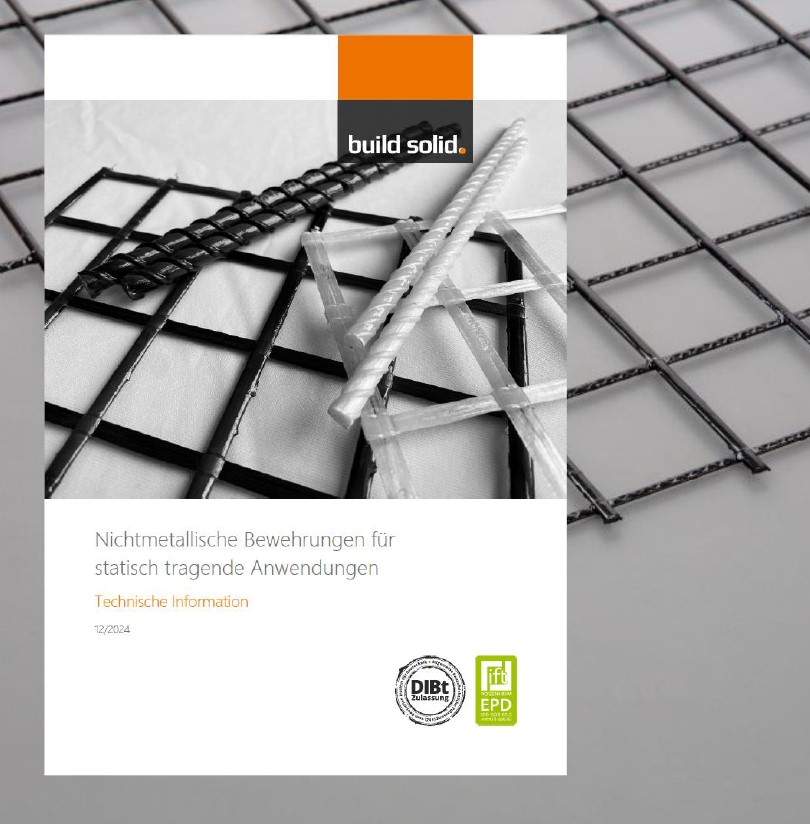
Our technical information offers you a comprehensive overview of carbon concrete and the use of our non-metallic reinforcements.
In addition to presenting our wide range of reinforcement solutions, we will show you which regulations apply when handling fiber-reinforced plastics. What needs to be taken into account during transport and storage? Which spacers and supports do I use? What about welding, accessibility and contact corrosion?
In addition, in a separate chapter we explain the background to the behavior of fiber composite materials, address the topics of durability and fatigue, and present our options for our formed reinforcements.
The technical information is a valuable addition to the approval and the technical product data sheets! For more info click HERE.
Although the DAfStb’s booklet 660 provides two design examples, entering the world of carbon concrete is not always easy.
We want to take away your fears, doubts and uncertainties and have created a design example for this purpose. A simple balcony slab, but with all the necessary verifications that are relevant for this component. In addition, we do not want to ask you to complete the calculation steps “by hand”.
Therefore, we offer you our calculation tool DESIGN (. xlsm format), with which you can very easily calculate the bending load-bearing capacity of a slab reinforced with building authority-approved solidian GRID carbon reinforcement grids in full compliance with the DAfStb Guideline.
Carbon concrete is a new topic, not as established as reinforced concrete. But that is about to change, because the advantages of using carbon concrete sensibly are obvious.
And so work is continuing to meet legal framework conditions so that carbon concrete is as easy to plan and design as reinforced concrete. Even after completion of the work on the DAfStb Guideline and DAfStb Issue 660, the work of the DAfStb subcommittee on “Non-metallic reinforcement” does not end: Work on the second version of the guideline has already begun, with which further findings, e.g. on fatigue or prestressing, are recorded and an adaptation to the new Eurocode 2 is being prepared.
The DAfStb is also currently working hard on revising the repair guideline, so that it will also be considered a recognized rule of technology for grid reinforcement during repairs.
As a reinforcement manufacturer, we are following this path and already have our next own products in the approval pipeline. We have also already strengthened our portfolio with a product that offers the possibility of also producing prestressed components with carbon concrete.